

Every weekday around 3pm, I would hit a wall. Not a gentle slowdown. A full stop. My lower back would tighten into a knot, my eyes would go soft and unfocused, and the work that felt urgent at 10am would suddenly feel optional. I tried caffeine. I tried a standing mat on the floor next to my seated desk as a reminder to get up. I tried setting a phone alarm to walk around the block. None of it stuck because the problem was still there when I sat back down: my chair, my desk, and my posture were all quietly working against me.
I work from home full time. I'm at my desk from roughly 8am to 5pm most days, sometimes longer. I had convinced myself that the right chair would fix everything, so I bought a decent one, the kind with lumbar support and adjustable armrests and all the features the reviews said mattered. It helped a little. My hips stopped aching by noon. But the 3pm crash kept coming, just with marginally better posture while I suffered through it.
What I eventually learned, mostly from reading too many Reddit threads at 11pm, is that the problem was not how I was sitting. The problem was that I was sitting. For eight straight hours. The human body is not built for that and no amount of ergonomic foam changes the underlying physics. You need to move. Specifically, you need the option to stand without having to leave your desk, because most of us will not voluntarily leave our desk during a work block even when we know we should.
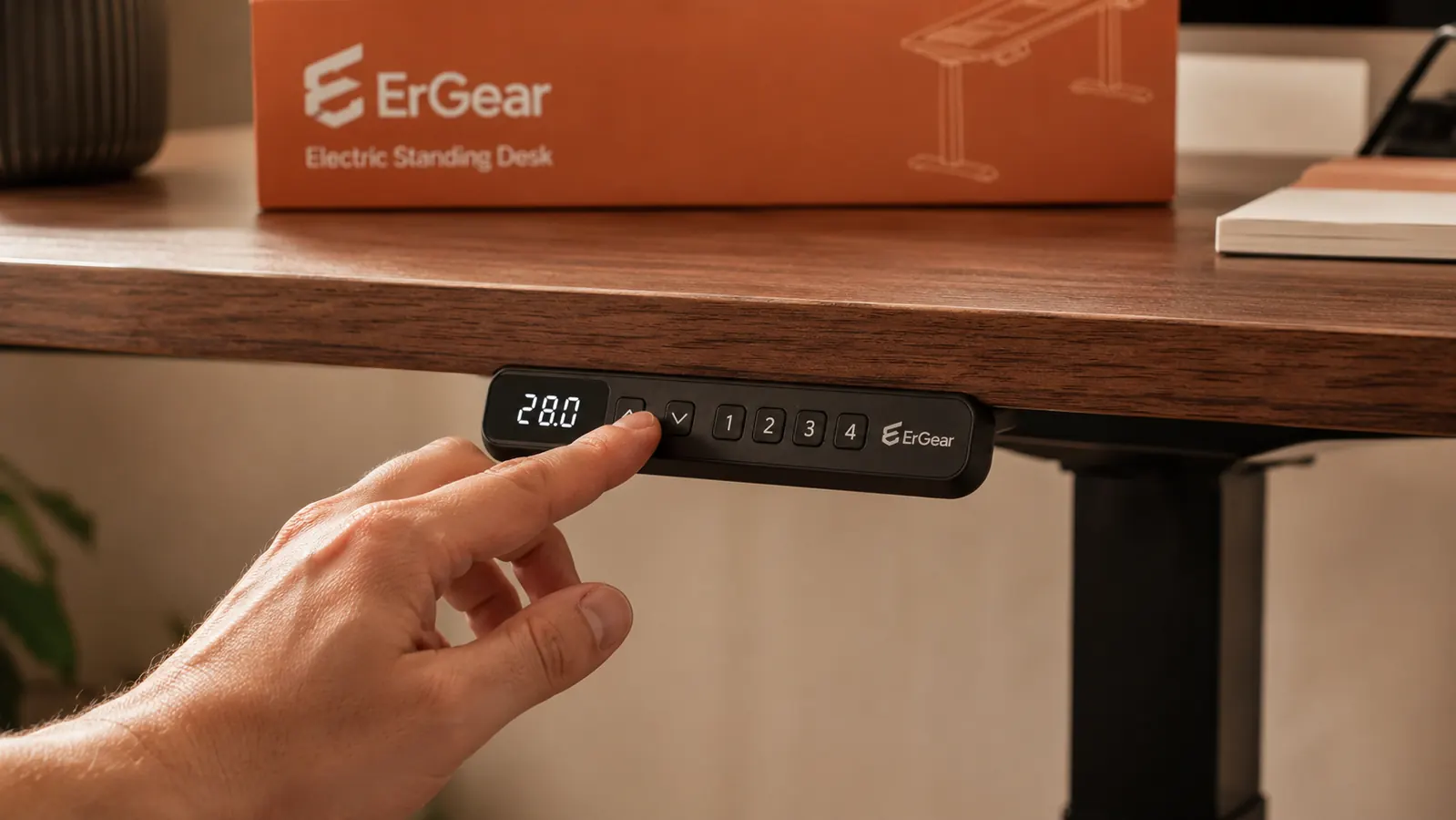
So I started looking at electric standing desks. I was skeptical about paying for a motor and a controller just to raise and lower a surface. It felt like a convenience feature dressed up as a health solution. But the more I read, the more I understood that the motor is exactly the point. A manual crank desk requires enough effort that you stop using it. An electric desk with memory presets means you press one button and the surface moves to your saved standing height in about four seconds. The friction is gone. And when friction is gone, the behavior actually happens.
The motor is the point. A manual crank desk requires enough effort that you stop using it. Push one button and it takes four seconds. The friction is gone, and when friction is gone, the behavior actually happens.
I landed on the ErGear 48-inch electric standing desk after about two weeks of comparison shopping. The deciding factors were not complicated. It had over 11,000 reviews on Amazon, a 4.5-star average, and a price that did not require me to spend the equivalent of a car payment on a desk. The 48-inch top gave me enough room for a laptop, an external monitor, a keyboard, and a mouse without things feeling cramped. The height range goes from about 28 inches to 47 inches, which covers both my sitting height and my standing height without adjustment. Setup took me about 45 minutes working alone, following the printed instructions, no special tools required.
You already know sitting all day isn't working. The ErGear is the simplest fix I found.
Over 11,000 reviews, 4.5 stars, and a motor that actually makes you use it. Check current pricing on Amazon before it changes.
Amazon Check Today's Price on Amazon →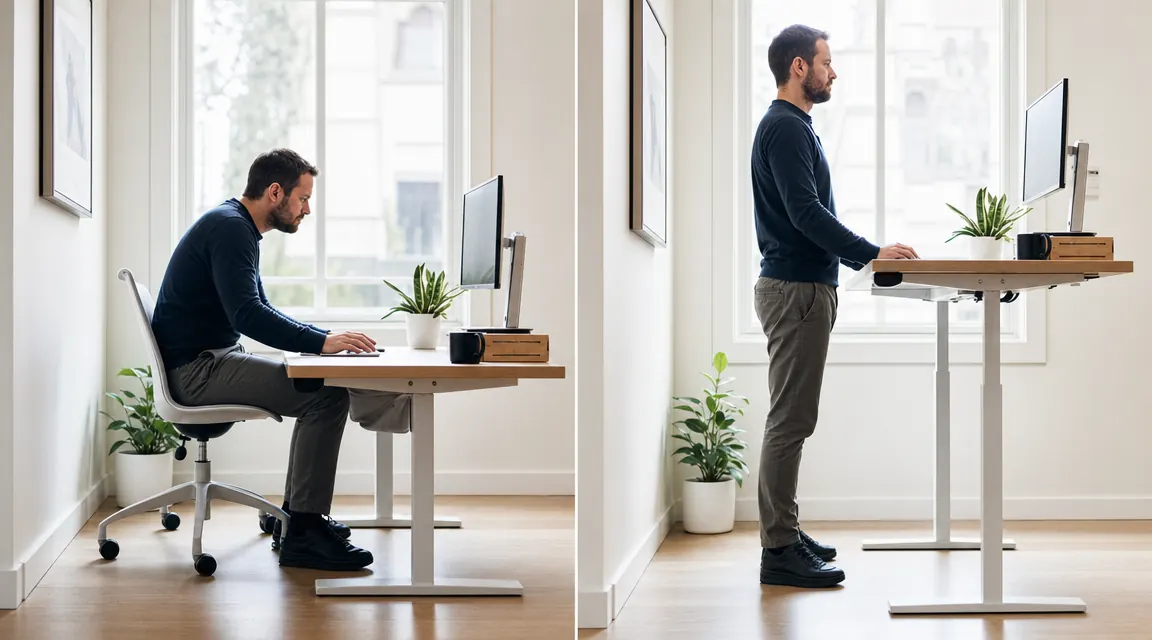
The first week, I stood for maybe 20 minutes in the morning and 20 minutes after lunch. That was it. My legs were not used to standing at a desk and they let me know. Week two, I stretched to 30 minutes each block. By week three I had settled into a rhythm that felt natural: sit for the first 90 minutes of the morning, stand during my 10am team call, sit through focused writing blocks, stand again from about 2:30 to 4pm. That last block is the one that changed everything. The 3pm wall stopped showing up. Not every day immediately, but within two weeks it was noticeably different. I stopped needing the afternoon coffee. I stopped losing 45 minutes to a mid-afternoon brain fog that I used to just power through by staring at the screen.
I want to be honest about what the desk does not fix. It does not fix a genuinely bad sleeping schedule. It does not replace the need for real breaks, the kind where you step away from the screen entirely. And it has a minor wobble at standing height if you push the surface laterally, which most reviews mention and which has never bothered me in practice but is worth knowing. It is not a luxury item with luxury build quality. The surface is a laminate top, not solid wood. The legs are steel but they are not going to win any industrial design awards.
What it is, is a tool that works. The motor is quiet. The memory controller saves four height presets so my standing height, my seated height, and my daughter's seated height are all one button press away. The cable management tray underneath keeps the power strip and cords off the floor. After eight months of daily use, nothing has broken, nothing has loosened, and I have not once wished I spent twice as much on a competing brand. For anyone curious about a long-term perspective, I wrote a full breakdown in my 8-month ErGear standing desk review that covers things like motor noise over time and exactly how I have the cable routing set up.
What I'd Tell You If We Were Sitting at My Kitchen Table
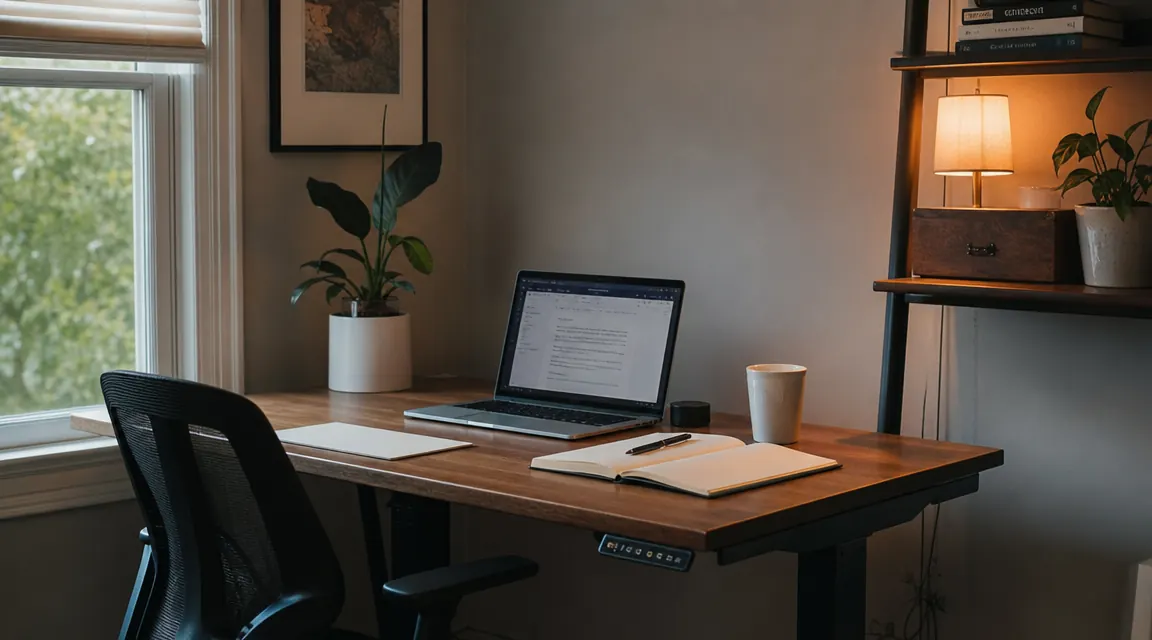
If a friend asked me whether to buy a standing desk, I would tell them this: do not overthink the options. The difference between a $160 electric desk and a $400 electric desk is real but it is not life-changing. What matters is that you actually get one, set it up, and give it three weeks to change your habits. The first week you will stand too little. The second week you will stand awkwardly and your calves will complain. By the third week you will have found your rhythm and the afternoon crash will start losing its grip.
I would also tell them to think about the mat. I did not buy one at first and I regretted it. Standing on a bare hardwood floor for 90 minutes is tolerable but not comfortable. A half-inch anti-fatigue mat under your feet makes standing feel sustainable instead of like a mild punishment. If you want to see exactly how I set everything up, including the mat and monitor position, the step-by-step home office standing desk setup guide covers the full process with measurements.
The other thing I would say is: do not wait until you have a back injury to do something about this. I waited longer than I should have. The 3pm crash felt like a personality quirk, like I was just someone who needed a nap. It turns out I was someone who needed to stand up for an hour in the afternoon. That is a much easier fix than I expected, and the ErGear made it easy enough that I actually kept doing it.
Three weeks is all it takes to rewire the afternoon habit. The desk is the only tool you actually need.
The ErGear 48-inch has stayed in my office for eight months and earned every inch of desk space it takes up. If you're ready to fix the afternoon wall, this is the practical way to do it.
Amazon Check Today's Price on Amazon →